SLIIT Research Project 2026

Smart Waste
Management System

An IoT-driven, intelligent municipal solid waste management framework combining environmental sensing, fill-level monitoring, ML-based prediction, and a mobile application for adaptive route optimization and resident–driver coordination for sustainable urban waste collection.

0
Components
0
Researchers
0
SDGs Targeted
0
Fill-Status Accuracy
IoT Sensing
ML Prediction
Route Optimization
Mobile App
Scroll to explore

Literature Review

Urban Waste Crisis

The World Bank projects that global solid waste generation will reach 3.4 billion tons annually by 2050, a 70% increase on 2016 levels. In Sri Lanka, the Colombo Municipal Council alone generates approximately 800 tons of municipal solid waste per day, and existing infrastructure operates well below the level needed for effective management.

IoT in Waste Management

Low-cost IoT platforms, particularly ESP32-class microcontrollers with integrated Wi-Fi, and cloud services such as Firebase make intelligent, data-driven waste management feasible. Existing smart bins predominantly monitor a single parameter — fill level — and lack environmental and gas sensing capabilities.

ML-Based Prediction

Research demonstrates that machine learning models, particularly XGBoost regression, can effectively predict waste volumes using historical municipal records combined with rainfall, temporal, zonal, demographic, and calendar features. Dynamic, sensor-informed routing can reduce operational cost by up to 40% compared with static scheduling.

Smart Collection Systems

Existing solutions address waste collection with fixed schedules and limited real-time information. There is a need for an integrated mobile workflow connecting IoT-derived critical-bin information with resident–driver coordination, combining GPS tracking, route assistance, and proximity-based notifications.

Research Gap

01

Absence of Environmental Sensing

Most commercial smart bins report fill level only; hazardous-gas (methane, ammonia, CO₂) and thermal-environmental data are missing from the telemetry, leaving sanitation workers exposed to avoidable gas hazards.

Component 1
02

Limited Behavioral Monitoring

Existing systems show that a bin is full but not how it got that way. There is no detection of illegal dumping, sudden fill spikes, abnormal lid activity, extended lid opening, or imminent overflow patterns.

Component 2
03

Insufficient Data for ML Models

Single-parameter fill-level data provide insufficient features for waste composition prediction. Localized municipal-level forecasting combining environmental, temporal, and demographic features is largely unexplored for Sri Lankan contexts.

Component 3
04

Weak Coordination Workflows

There is a gap in integrating IoT-derived critical-bin information with a unified mobile coordination workflow for resident–driver communication, live vehicle tracking, and proximity-based arrival notifications.

Component 4

Research Problem & Solution

The Problem

Conventional municipal waste collection follows fixed routes and schedules with no real-time knowledge of bin conditions. Waste collection decisions are made without knowledge of the environmental state of each bin — a half-full bin emitting elevated methane or ammonia may need priority collection for safety and odour reasons, yet no fill-level-only system can flag it. This leads to:

  • Premature collection of part-filled bins
  • Delayed service to overflowing bins
  • Higher fuel consumption and excess labour
  • Worker exposure to hazardous gas conditions
  • Avoidable environmental contamination

Our Solution

A comprehensive Smart Waste Management System that builds an end-to-end predictive framework combining four integrated components:

  • IoT-based environmental and gas sensing with real-time cloud telemetry
  • Smart fill-level monitoring with anomaly detection and behavior-aware tracking
  • ML-based municipal waste prediction, composition estimation, and circular economy revenue modeling
  • Mobile application for real-time bin detection, adaptive route optimization, and resident-driver coordination

Research Objectives

Environmental Sensing Smart Bin

Hemsara K.D.S. (IT22548528)
  • Design and build an ESP32-based sensing unit with MQ-135, MQ-4, and DHT22 sensors
  • Implement GREEN/YELLOW/RED criticality classification using multi-parameter thresholds
  • Publish timestamped JSON telemetry to Firebase Realtime Database
  • Achieve defined targets for sensor accuracy, alert accuracy, delivery rate, latency and uptime

Smart Fill-Level & Occupancy Monitoring

Gamaariya C.C. (IT22202772)
  • Combine HC-SR04 ultrasonic sensor and magnetic reed switch on ESP32
  • Classify bin fill into OK, Warning, and Critical status levels
  • Implement rule-based anomaly detection for illegal dumping, fill spikes, and abnormal activity
  • Achieve >95% fill-classification accuracy and >90% anomaly detection accuracy

ML-Based Waste Prediction & Revenue Hub

Jayawardhane K.G.M.S. (IT22213358)
  • Develop XGBoost regression pipelines for wet and dry waste prediction
  • Integrate rainfall, temporal, zonal, demographic, and calendar features
  • Build composition estimation, compactor planning, and resource-recovery modules
  • Target >85% predictive accuracy on municipal test data

Mobile App for Real-Time Bin Detection, Adaptive Route Optimization & Resident-Driven Coordination

Wijesiri A.M. (IT22088482)
  • Integrate IoT-based smart-bin monitoring to identify bins reaching critical waste levels in real time
  • Develop a mobile map interface that enables drivers to identify and prioritize critical bins
  • Develop a resident–driver coordination mechanism for submitting and managing pickup requests
  • Implement route support for drivers based on their current location and collection points
  • Evaluate the usability, functionality, and effectiveness of the mobile-based system

Methodology

The project follows a design-science, design-and-development approach: each of the four components designs and builds a working artefact and evaluates it against predefined targets. Development proceeds through problem identification, solution design, artefact creation, and evaluation.

1

Problem Identification

Systematic literature review and gap analysis identifying limitations in current waste management approaches, covering IoT sensing, ML prediction, and mobile coordination.

2

Solution Design

Architecture design of four integrated components with defined interfaces. Hardware selection (ESP32, MQ sensors, DHT22, HC-SR04), ML model selection (XGBoost), and mobile framework decisions.

3

Artifact Development

Implementation of IoT firmware (Arduino/C++), cloud integration (Firebase Realtime Database), ML pipelines (Python/XGBoost) with a Flask back-end, web dashboards (React), and a Flutter mobile application with GPS tracking, live maps, and route support.

4

Evaluation & Validation

Testing against predefined metrics: sensor accuracy, fill-status classification, anomaly detection, prediction accuracy, cloud delivery and latency, and end-to-end functional test scenarios. See Results & Findings for the measured outcomes.

Technologies Used

Hardware & IoT

ESP32 Microcontroller
MQ-135 Air Quality Sensor
MQ-4 Methane Sensor
DHT22 Temp/Humidity
HC-SR04 Ultrasonic Sensor
Reed Switch Magnetic Sensor

Cloud & Backend

Firebase Realtime Database
Flask ML Back-end (REST API)
MongoDB Prediction Run Storage
FCM Push Notifications
Cloud Firestore Mobile App Data & Real-Time Streams
Firebase Auth User Authentication
Cloudflare Workers Serverless Backend (TypeScript)

ML & Data Science

Python Programming Language
XGBoost ML Framework
Scikit-learn Data Processing

Frontend & Mobile

React Web Dashboard
Flutter / Dart Mobile App
Arduino/C++ Firmware
OSRM Road-Route Geometry
OpenStreetMap Maps (flutter_map)
Geolocator GPS Location

System Architecture

IoT Sensing Layer

Environmental Sensing MQ-135, MQ-4, DHT22
Fill-Level Monitoring HC-SR04, Reed Switch

Cloud & Processing Layer

Firebase Realtime DB Data Storage & Sync
ML Prediction Engine XGBoost · Flask API

Application Layer

Web Dashboard React Dashboard
Mobile App Flutter · Route & Coordination

Results & Findings

Key evaluation results of each component, as reported in the individual theses.

Environmental Sensing Smart Bin

Hemsara K.D.S. (IT22548528)
95.0% Gas-alert true-positive rate
99.4% Payload delivery to cloud
1.84 s Mean cloud latency
30 days Continuous run, 2.1% missing data
  • Acquired and transmitted MQ-135, MQ-4 and DHT22 readings to Firebase in real time
  • DHT22 temperature RMSE of 0.82 °C and humidity RMSE of 2.74 %RH
  • Maximum recorded cloud latency of 4.63 s, within the 5 s target
  • Met the main predefined targets for sensing, cloud communication and long-term data collection

Smart Fill-Level & Occupancy Monitoring

Gamaariya C.C. (IT22202772)
96 / 100 Fill-status test cases classified correctly
57 / 60 Anomaly scenarios detected
1.8 s Mean alert latency
495 / 500 Readings received in Firebase
  • Ultrasonic distance error of 0.2–0.3 cm (MAE) at 5, 15 and 25 cm reference distances
  • Illegal dumping, fill spikes, abnormal lid activity, extended lid opening and overflow detected in 90–100% of test scenarios
  • Maximum alert latency of 2.9 s across all test runs
  • Live bin status and archived records were successfully consumed by the other components

ML-Based Waste Prediction & Revenue Hub

Jayawardhane K.G.M.S. (IT22213358)
87.67% Dry-waste prediction accuracy
80.85% Wet-waste prediction accuracy
0.949 Dry-waste R²
126 Held-out test records
  • Dry waste was forecast more accurately than wet waste (R² 0.9492 vs 0.8035)
  • Dry-waste R² exceeded 0.90 in all four zones
  • Mean absolute error (1.52 t dry, 3.28 t wet) stayed below the capacity of one 5-tonne truck
  • Forecasts were converted into truck trips, waste composition and revenue estimates in a working dashboard

Mobile App for Real-Time Bin Detection, Adaptive Route Optimization & Resident-Driven Coordination

Wijesiri A.M. (IT22088482)
8 / 8 Workflows verified in practical tests
3 User roles: resident, driver, admin
~30 Application screens
Real-time Tracking & arrival notification
  • Resident pickup requests appeared on the driver map in real time
  • Driver movement was visible to residents, and the nearest-truck display updated as vehicles moved
  • Proximity condition triggered the expected “Truck is here” arrival notification
  • Critical IoT bin events were shown in red on the driver map
  • Registration/OTP, password recovery and admin deactivation/recovery workflows operated as expected

Integration: The four components were integrated through Firebase. Live bin status from the IoT components was read by the mobile application, and archived sensor data was available to the ML component for time-series processing.

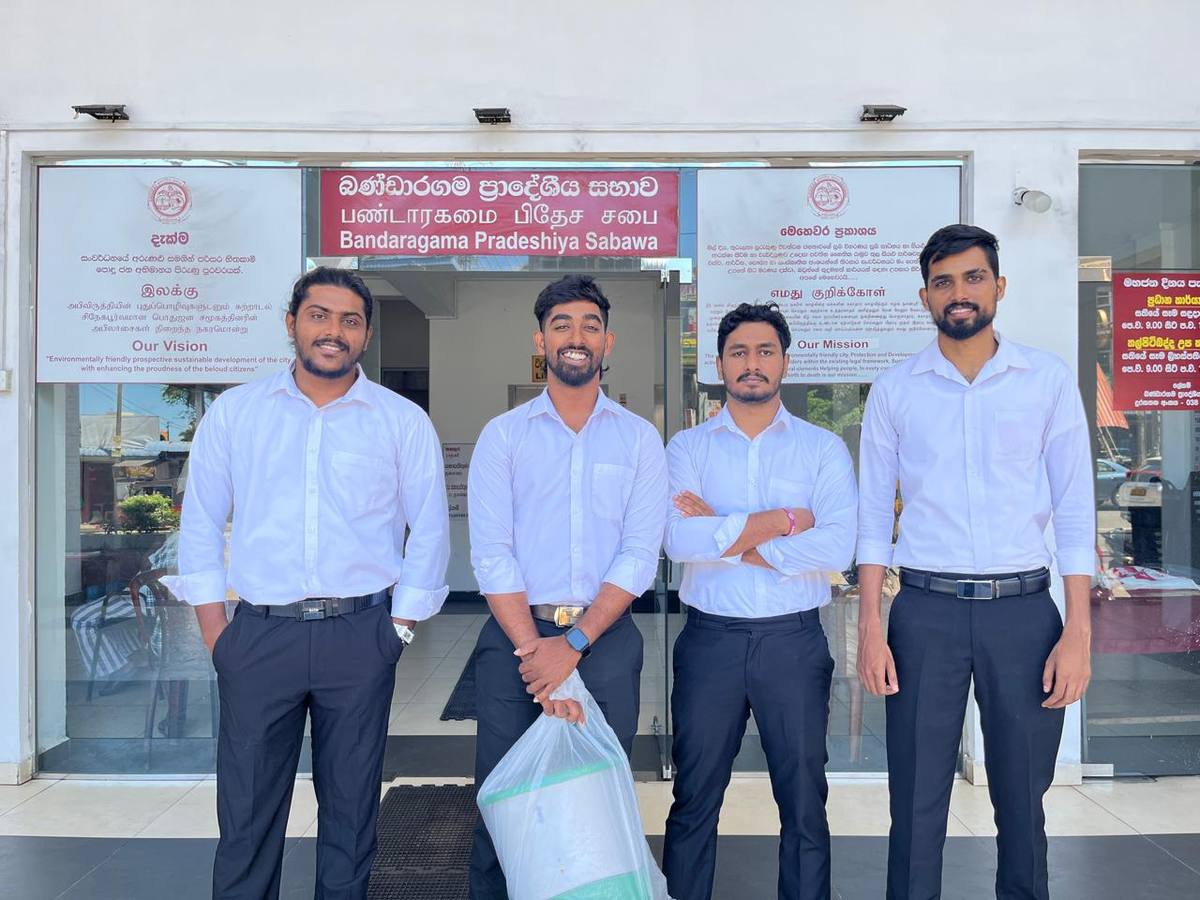
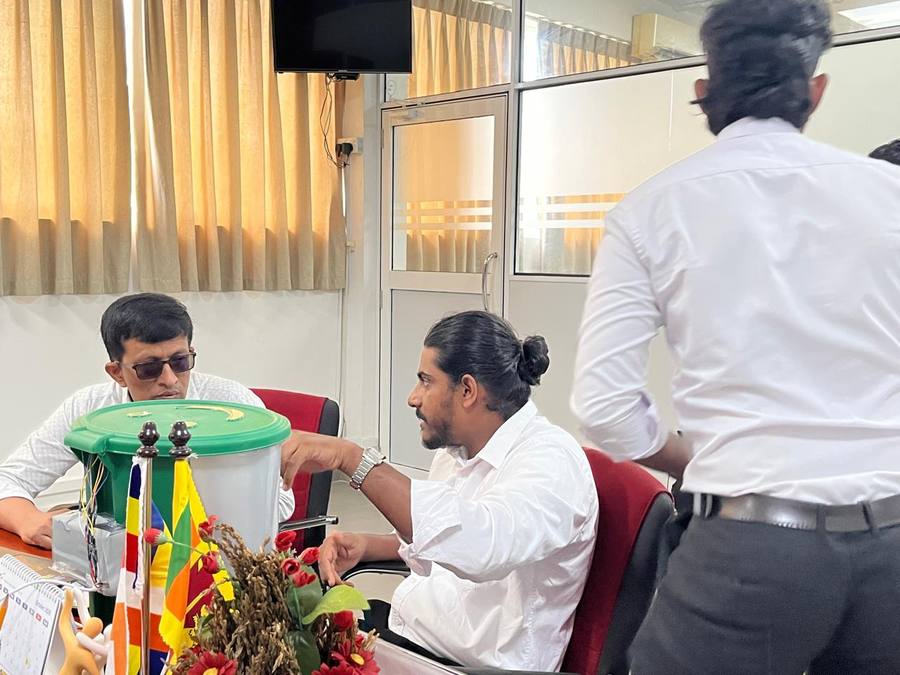
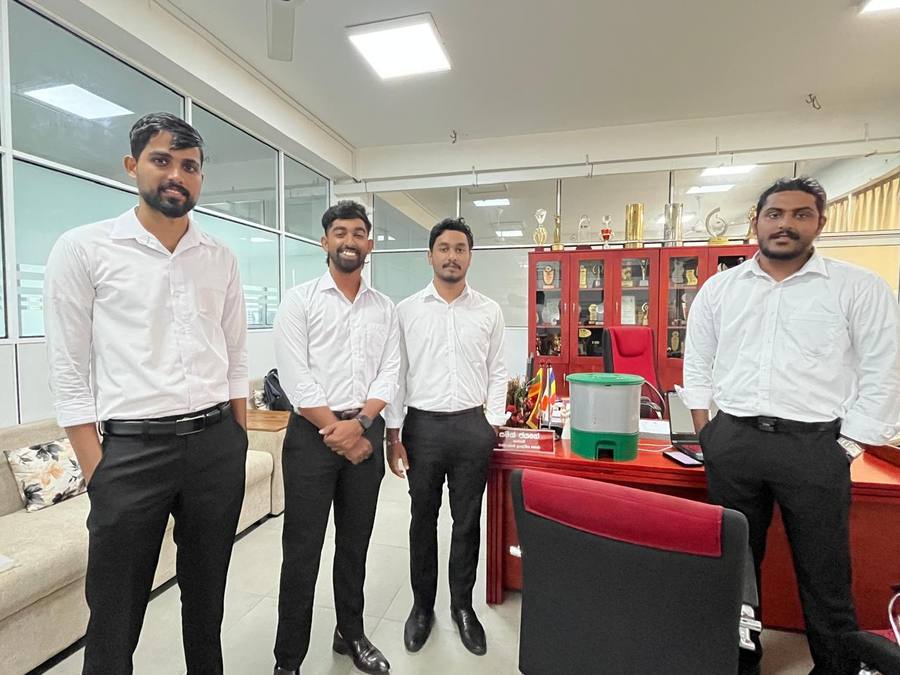
Field Visit: Bandaragama Pradeshiya Sabha

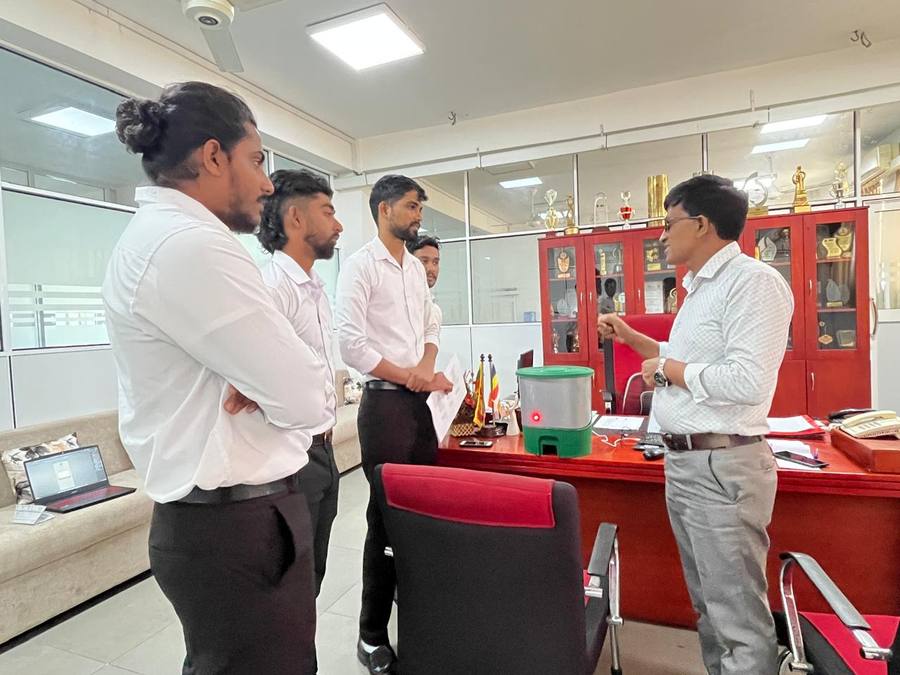
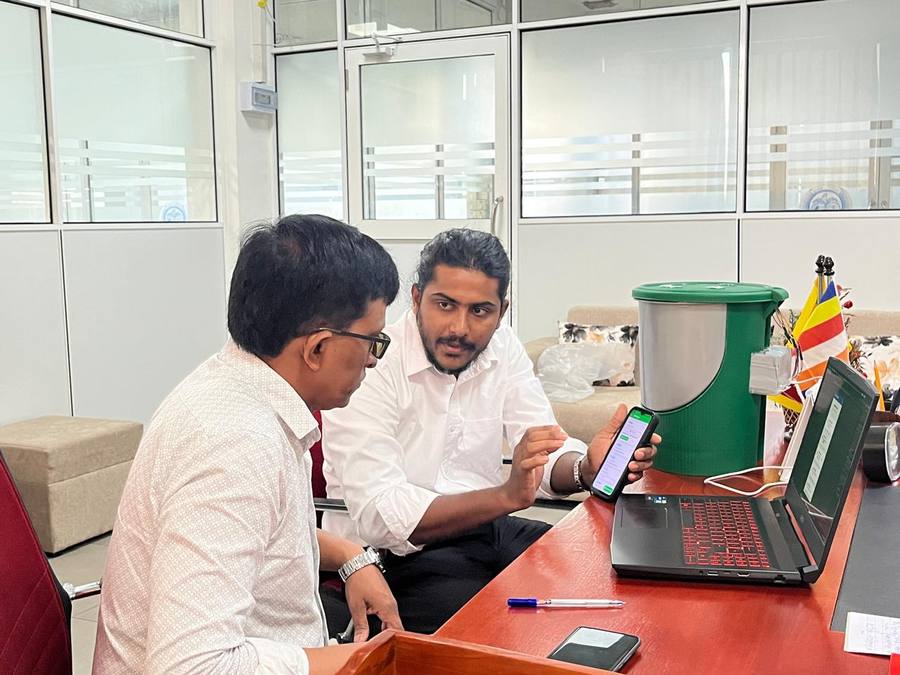
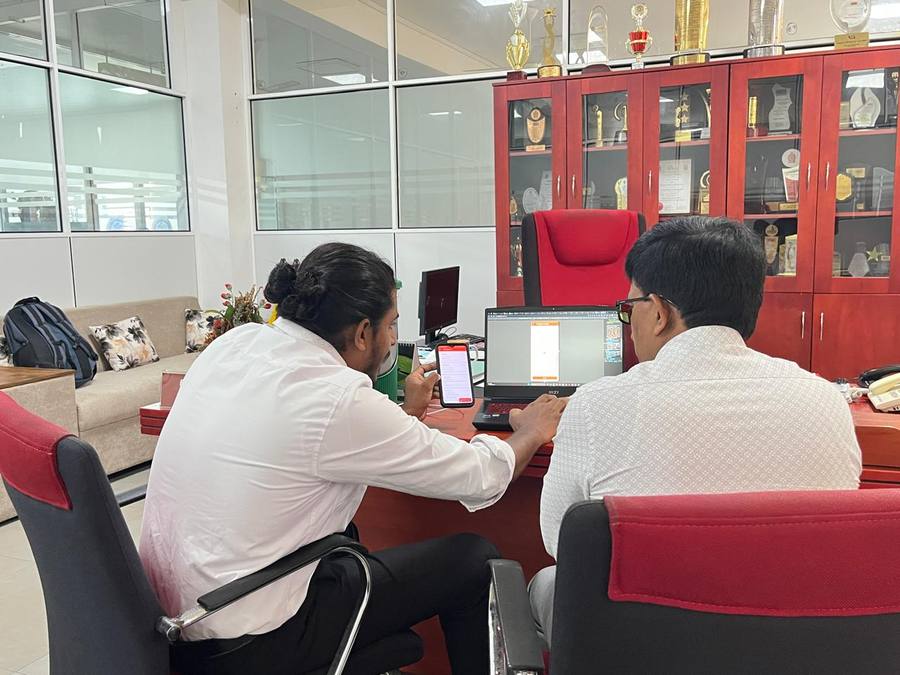
The team presented the Smart Waste Management System to the Chairman of the Bandaragama Pradeshiya Sabha, a local authority responsible for municipal waste collection, to get real-world feedback on the solution.

The research team in front of the Bandaragama Pradeshiya Sabhawa office
The research team at the Bandaragama Pradeshiya Sabhawa
  • DateOctober 2026
  • PlaceBandaragama Pradeshiya Sabha, Kalutara District
  • Met withMr. Samith Jayage (සමිත් ජයගේ), Chairman
  • DemonstratedIoT smart bin prototype, mobile application and web dashboard

Feedback

The Chairman appreciated the project and its value for local-authority waste collection, giving the team positive feedback on the proposed solution.

Milestones

All assessments of the research project with their official dates and what was presented at each stage. Select a milestone to view its details.

17 March 2026 Project Proposal Completed

The proposal presentation to the panel, covering the research problem, literature survey, research gap, objectives and planned methodology of each member’s component and how it fits into the integrated Smart Waste Management System.

  • Proposal presentation (group)
  • Individual proposal reports (4)
Component revision: Following panel feedback at the proposal presentation, the component of Wijesiri A.M. (IT22088482) was revised from ML-Based Waste Level Prediction to Mobile Application for Real-Time Bin Detection, Adaptive Route Optimization, and Resident-Driven Coordination. The revised component has been followed from Progress Presentation 1 onwards.
12 May 2026 Progress Presentation 1 Completed

The first progress review, presenting the proposal feedback and the improvements made, the progress of all four components (including the revised mobile component), the initial prototypes and the commercialization plan.

  • Progress presentation slides
  • Prototype demonstration
1 September 2026 Progress Presentation 2 Completed

The second progress review, presenting the feedback from Progress Presentation 1 and the solutions applied, the integrated system overview, evaluation results and a working demonstration of all four components together.

  • Progress presentation slides
  • Integrated system demonstration
11 October 2026 Draft Thesis, Website & Final Checklist Completed

Submission of the draft thesis of each member, the complete source code of this research website and the final checklist, all on 11 October.

  • Draft individual theses (4)
  • Research website submission
  • Final checklist submission
21 October 2026 Final Presentation & Viva Up Next

The final presentation and demonstration of the complete integrated Smart Waste Management System, followed by the individual viva of each member to defend their research work, methodology, results and contributions.

  • Final presentation and complete system demonstration
  • Final group report
  • Individual viva voce (4)
23 October 2026 Research Paper Upcoming

Submission of the research paper written from the project, followed by the evidence of its publication by 1 December 2026.

  • Research paper submission (23 October 2026)
  • Evidence of publication (by 1 December 2026)
28 October 2026 Final Thesis Submission Upcoming

Submission of the final individual thesis of each member, with the corrections from the final presentation and viva applied.

  • Final individual theses (4)

Official Timeline

2026 batch deadlines of the research project
ActionDeadlineStatus
Project Proposal Submission15 March 2026Completed
Project Proposal Presentation17 March 2026Completed
Progress Presentation 112 May 2026Completed
Check List Submission13 May 2026Completed
Progress Presentation 21 September 2026Completed
Draft Thesis Submission11 October 2026Completed
Website Submission11 October 2026Completed
Final Checklist Submission11 October 2026Completed
Final Presentation & Viva21 October 2026Up Next
Website Evaluation & Logbook Submission21 October 2026Up Next
Research Paper Submission23 October 2026Upcoming
Final Thesis Submission28 October 2026Upcoming
Evidence of Research Paper Publication1 December 2026Upcoming

Documents

All research documents produced from the proposal stage to the final stage of the project. Documents open in a new tab.

Presentations

Slides from all presentations delivered during the research project. Slides open as PDF in a new tab.

Completed

Proposal Presentation

Research problem, the proposed integrated solution, and each member’s component objectives, tools and evaluation plan.

View Slides
Completed

Progress Presentation 1

Proposal feedback and the improvements made, progress of all four components (including the revised mobile component) and the commercialization plan.

View Slides
Completed

Progress Presentation 2

Feedback from Progress Presentation 1 and the solutions applied, the integrated system overview and a working system demonstration.

View Slides
Completed

Final Presentation

Complete system demonstration, research findings, contributions, and thesis defense.

View Slides

System Demonstration Video

Recorded demonstration of the integrated system, shown at the progress presentations.

Watch Video

About Us

Meet the researchers behind the Smart Waste Management System.

Supervisors

Mr. Uditha Dharmakeerthi

Mr. Uditha Dharmakeerthi

Supervisor

Academic Fellow
Department of Computer Systems Engineering
Faculty of Computing, SLIIT

  • MBA – London Metropolitan University, UK
  • BSc in Management & Information Technology – University of Kelaniya
  • CCNA & Certified Ethical Hacker (CEH)
Internet of ThingsNetworkingInformation SecurityCloud Computing & SDNWireless Communications
Mr. Kanishka Prajeewa Yapa

Mr. Kanishka Prajeewa Yapa

Co-Supervisor

Lecturer
Department of Computer Systems Engineering
Faculty of Computing, SLIIT

  • MSc in Computer Science – University of Kelaniya
  • BSc – University of Colombo
  • Member of (ISC)², ISACA & EC-Council
Cyber SecurityThreat ModelingMachine LearningDeep LearningIoMT

Research Team

Hemsara K.D.S.

Hemsara K.D.S.

IT22548528

IoT-Based Environmental Sensing Smart Bin

Gamaariya C.C.

Gamaariya C.C.

IT22202772

Smart Fill-Level & Occupancy Monitoring

Jayawardhane K.G.M.S.

Jayawardhane K.G.M.S.

IT22213358

ML-Based Waste Prediction & Revenue Hub

Wijesiri A.M.

Wijesiri A.M.

IT22088482

Mobile App for Real-Time Bin Detection, Adaptive Route Optimization & Resident-Driven Coordination

Acknowledgements

We sincerely thank our supervisor, Mr. Uditha Dharmakeerthi, and our co-supervisor, Mr. Kanishka Prajeewa Yapa, for their guidance, encouragement and valuable feedback throughout this research. We are also grateful to the Chairman and staff of the Bandaragama Pradeshiya Sabha for welcoming our team, reviewing our prototype and sharing practical insight into local waste collection, and to the Faculty of Computing, SLIIT, for the facilities and support that made this project possible.

Contact Us

Have a question about our research or one of the components? Get in touch with the team.

Email Us

Call Us

+94 71 276 5127
Research team (mobile)

+94 11 754 4801
SLIIT (main line)

Institution

Sri Lanka Institute of Information Technology (SLIIT)
Faculty of Computing

Visit Us

SLIIT Malabe Campus,
New Kandy Road, Malabe 10115,
Sri Lanka

Send a Message

Choose a topic and your message is addressed to the right team member.

Clicking "Send Message" opens your email app with this message ready to send to our team.

General Email Template

You can also copy this template and send it from any email account.

Open in Email App
View the source codegithub.com/MinuraJaySL/R26-IT-126

Find Us

SLIIT Malabe Campus, New Kandy Road, Malabe.

Get directions